
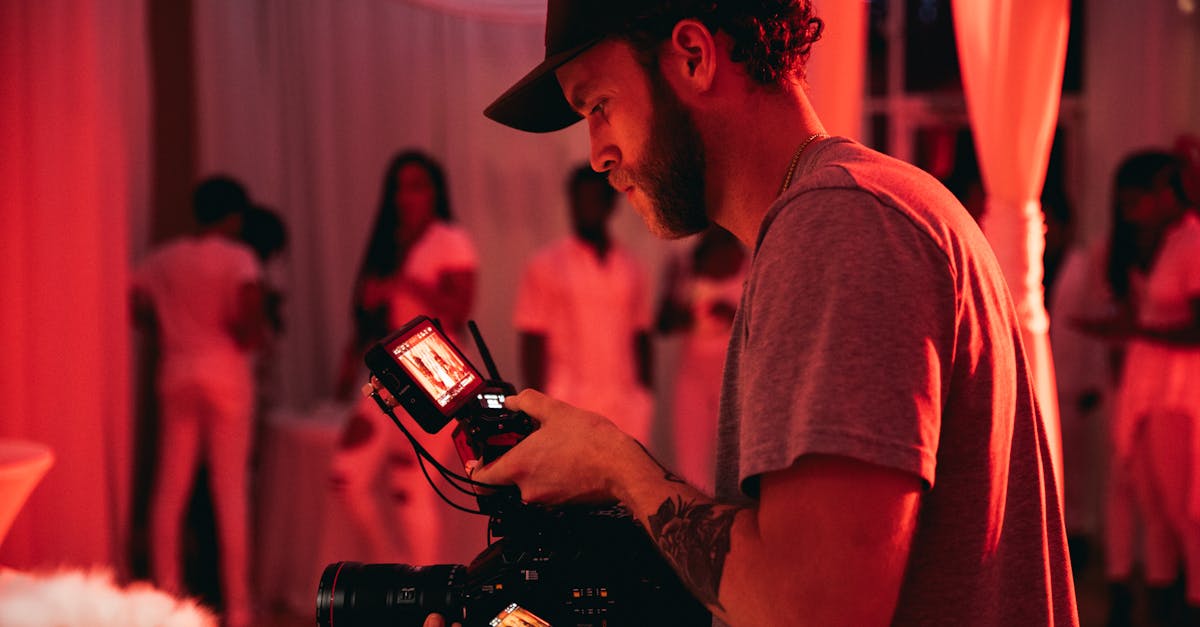
A videographer and a cinematographer may both work behind a camera, but their core focus and creative scope differ in meaningful ways. A videographer is typically responsible for capturing real time events as they unfold, often operating as a one‑person team who handles shooting and, in many cases, editing. This role prioritizes documenting moments clearly and efficiently, which is why videographers are commonly associated with live events and situations that require agility and minimal setup.
A cinematographer, by contrast, is defined by a more artistic and intentional approach. Their role centers on shaping the visual storytelling of a film or video through deliberate choices in lighting, framing, camera movement, and overall mood. Rather than simply recording what happens, a cinematographer collaborates to craft how it should look and feel. This involves deeper pre‑production planning and creative decision‑making that aligns with a director’s narrative vision.
Despite these distinctions, the two roles do overlap. Both are video professionals and share foundational skills in camera operation and composition. Smaller productions may blur the lines further, with a single professional performing duties associated with both roles.
In Dubai’s dynamic media landscape where event coverage, branded content, and cinematic campaigns coexist the distinction often comes down to the level of creative control, production scale, and the storytelling ambition behind the project. Understanding these differences helps clients match the right visual professional to their goals.
A videographer typically operates as a multi‑tasking professional who manages most aspects of production alone. They capture events as they unfold, handle their own camera work, manage basic lighting and audio, and often take on the editing themselves. Because a videographer is usually a one‑person crew, their workflow emphasizes efficiency, adaptability, and the ability to respond quickly to real‑time moments.
A cinematographer, on the other hand, oversees the visual direction of a production and leads the camera and lighting departments. Their responsibilities are rooted in artistic decision‑making shaping the look of a scene through lighting choices, lens selection, camera movement, and overall visual style. They collaborate closely with the director to translate story and emotion into composed images, guiding a dedicated team that may include camera operators, focus pullers, gaffers, and other specialists.
Decision‑making authority also differs. A videographer makes independent calls on composition, exposure, and coverage while juggling multiple technical tasks. A cinematographer works within a more hierarchical structure, aligning creative decisions with the director’s vision and coordinating with producers to ensure the visual approach supports the project’s goals.
Crew size marks one of the most noticeable contrasts. Videographers frequently work solo or with a very small team, suited to fast‑paced documentation such as live shows or weddings. Cinematographers are commonly part of a larger production environment, where dividing responsibilities across departments allows for more controlled and stylized imagery.
In Dubai’s varied media landscape ranging from intimate events to high‑end commercial and narrative productions these distinctions define how each professional contributes on set and how the overall production experience unfolds.
A videographer’s creative approach is generally rooted in documenting events as they unfold. Because this role often operates as a one‑person crew, the focus typically leans toward capturing real time moments clearly and efficiently. The priority is faithful coverage ensuring key actions, people, and details are preserved. This event driven mindset naturally shapes the storytelling style, favoring continuity and authenticity over elaborate visual construction.
A cinematographer, on the other hand, approaches storytelling as an intentional, crafted process. Their work centers on conveying emotion and narrative through artistic decisions involving lighting, framing, sound, and camera movement. This aligns with descriptions of cinematographers making creative choices for film or television, where the goal is not just to record an event but to shape how the audience feels and interprets the story. Elements such as mood, tone, and visual consistency are developed deliberately, often long before the camera rolls.
The difference is also visible in pre‑production. A videographer may plan coverage to ensure nothing is missed, while a cinematographer invests more deeply in visual development designing lighting styles, choosing lenses for specific emotional effects, and coordinating with directors to align on storytelling beats.
While both roles can produce compelling visuals, their perspectives differ: one prioritizes documentation, the other prioritizes cinematic expression. In practice, these approaches can overlap, especially on smaller projects where clients want clean event capture with a touch of stylized flair. The key distinction lies in intention whether the goal is to preserve reality or to craft a deliberate visual narrative.
The tools each professional relies on say a lot about the scope of their work. A videographer typically uses streamlined camera and lighting setups designed for mobility and efficiency. Because they often operate as a one‑person crew, their gear tends to be versatile enough to handle shooting, basic lighting, and on‑the‑spot adjustments without extensive support. This approach suits event coverage and situations where responsiveness is more important than elaborate setups.
A cinematographer, on the other hand, works with equipment built for controlled, visually driven productions. Their toolkit may include advanced cinema cameras, interchangeable lenses chosen for specific aesthetic qualities, and grip equipment that allows for precise camera movement and lighting design. Since a cinematographer focuses on crafting images that support narrative or brand storytelling, each piece of gear is selected to achieve a deliberate visual outcome.
This difference in technical complexity also reflects the presence of specialized crew. Cinematographers often collaborate with roles such as focus pullers and gaffers, who help manage detailed camera operation and lighting execution. These collaborators ensure the cinematographer can concentrate on artistic decisions rather than hands‑on technical tasks.
With greater equipment needs and more extensive crew support, cinematography generally requires a higher production budget. In commercial and film sectors, this investment allows for refined lighting setups, sophisticated camera rigs, and the time needed to shape every shot. Videography, being more compact and self‑sufficient, aligns with productions that prioritize agility and cost‑effectiveness.
Overall, the gear and technical workflow you choose should align with the visual ambition and scale of your project.
In Dubai’s fast‑growing media landscape, the kinds of projects handled by videographers and cinematographers follow the same industry patterns seen elsewhere but are shaped by the city’s diverse mix of events and content needs. Videographers typically take on work that requires agile coverage of real‑time moments. This includes weddings, live shows, and other general events, where being a one‑person operator allows them to capture unfolding action efficiently. Their focus is on documenting what happens with clarity and continuity, making them a practical choice for occasions that prioritize quick turnarounds and comprehensive coverage.
Cinematographers, on the other hand, are usually engaged for projects that demand a more deliberate artistic approach. According to established definitions, they work in film and television and make creative decisions about lighting, framing, and camera movement to shape the story. In Dubai, this translates naturally into narrative‑driven productions, commercial storytelling, and any project where mood, style, and visual cohesion are central to the final result.
For businesses or creators deciding which professional to hire, the key question is whether the project is primarily event‑driven or story‑driven. If the goal is to capture a live occasion or produce straightforward documentation, a videographer is often the most suitable and efficient option. If the aim is to craft a polished, cinematic piece with intentional visual design whether for film, television, or visually expressive commercial content a cinematographer brings the depth and creative oversight needed.
Both roles are essential within Dubai’s vibrant production ecosystem, but the right choice depends on the balance between immediacy and artistry your project requires.
Budget is often the clearest indicator of whether a project needs a videographer or a cinematographer, because each role aligns with a different level of resources and support. A videographer typically operates as a solo professional, handling shooting and, in many cases, editing and basic lighting on their own. This “one‑man crew” structure, described across multiple industry explanations, keeps costs lean and makes videography a strong fit for projects that require efficiency and minimal overhead.
Cinematography, by contrast, is rooted in a more complex production model. A cinematographer generally works within film or television environments where artistic decisions are made collaboratively, supported by specialized crew members across camera and lighting departments. This inherently increases budget requirements, as projects often call for advanced camera systems, dedicated roles like focus pullers or gaffers, and the infrastructure of a coordinated team.
These differences also shape timelines. A videographer’s streamlined workflow usually allows for faster turnarounds, well suited to event coverage or smaller scale content. Cinematography involves more extensive planning, visual development, and post production, all of which expand both schedule and financial scope.
In a market with businesses of all sizes, scalability becomes a key consideration. Startups or smaller organizations often benefit from the agility and affordability of videography, especially when the goal is straightforward coverage or simple storytelling. Larger enterprises or high impact campaigns may lean toward cinematography when visual nuance, controlled lighting, and narrative cohesion are creative priorities.
Understanding how budget and team structure influence these roles helps ensure that the choice between videographer and cinematographer aligns with both resources and desired production value.
The path to becoming a videographer or cinematographer often begins with a shared foundation in camera operation, composition, and editing, but the depth and focus of training can differ significantly. Many videographers build their careers through hands on experience, since they frequently operate as a one‑person team responsible for shooting and editing. This practical approach naturally develops technical proficiency and adaptability, especially when capturing live events or fast moving situations.
Cinematographers, by contrast, tend to follow a more specialized route. Their work in film and television requires advanced knowledge of lighting, visual storytelling, and the collaborative dynamics of a larger crew. Training may include formal coursework such as advanced cinematography and editing classes designed to strengthen artistic decision making and expand visual language. This foundation supports their role in shaping mood, tone, and narrative through lighting design, framing, and camera movement.
Experience also diverges over time. Videographers often build portfolios that highlight versatility across events and quick turnaround projects, while cinematographers curate work that reflects a consistent visual style and a refined command of cinematic techniques. Some professionals begin as videographers and gradually transition into cinematography as they gain experience with more complex productions and creative responsibilities.
Both paths demand continuous learning, especially with rapidly evolving camera, lighting, and editing technologies. Staying current ensures each professional can meet the creative and technical expectations of clients and productions in a competitive media landscape.
Selecting between a videographer and a cinematographer starts with clarifying the outcome you want. If your priority is straightforward coverage of an event or a moment as it unfolds, a videographer is typically the practical choice. As noted in industry descriptions, a videographer often operates as a one‑person team, capturing live shows, weddings, and general events while handling filming and editing independently. This approach suits projects where agility, simplicity, and quick turnaround matter.
If your project calls for a crafted visual narrative, a cinematographer may be the better fit. Descriptions of the role highlight their responsibility for artistic decisions using lighting, sound, camera movement, and overall visual design to shape the story. This level of creative involvement is ideal for work that depends on mood, tone, and a cohesive visual language.
Before deciding, outline your project goals, intended message, and the visual impact you expect. Matching these expectations with your budget and timeline helps determine whether a lean, single‑operator workflow or a more involved creative process aligns best.
Reviewing showreels can also clarify differences quickly. Look for how each professional handles framing, composition, and storytelling. A videographer’s portfolio typically focuses on capturing events clearly and reliably, while a cinematographer’s work often emphasizes stylized imagery and deliberate visual storytelling.
Finally, ask about workflow and team structure. Some professionals work entirely solo, while others collaborate with specialists depending on the project’s needs. Understanding who will be involved and how ensures you select the professional whose approach supports your vision.
• https://www.rmcad.edu/blog/whats-the-difference-between-videography-and-cinematography/
• https://ca.indeed.com/career-advice/finding-a-job/videographer-vs-cinematographer
• https://www.tascastudios.com/blog-articles/videographer-vs-cinematographer
• https://www.scouty.com/en-us/blog/what-is-a-videographer-vs-cinematographer
• https://weddingkeystudio.com/blog/wedding-videography-trends/videographer-vs-cinematographer/
• https://www.adobe.com/creativecloud/video/discover/videography-vs-cinematography.html